

Navigating the Path to Publication: A Guide to Successfully Publishing Your Article in a Well-Indexed Journal
August 24, 2023
Article Publication Services for Medical Researchers
August 25, 2026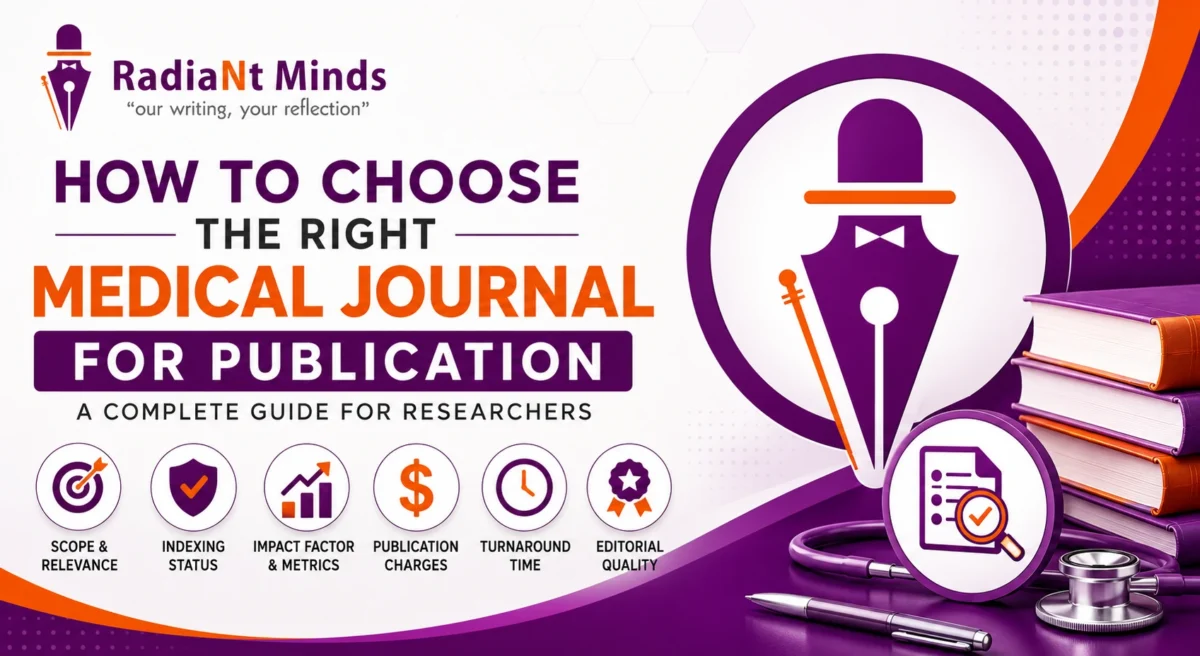
How to Choose the Right Medical Journal for Publication: A Complete Guide for Researchers?
Introduction
Publishing scientific research is a cornerstone of evidence-based healthcare. It allows new discoveries to influence clinical practice, treatment guidelines, and healthcare policies while contributing to the advancement of medical science. However, conducting quality research and writing a well-structured manuscript are only part of the publication journey. Selecting the right medical journal is equally important, as it directly affects the visibility, credibility, readership, and impact of your research.
With nearly 30,000 medical and health science journals and an estimated 25,000 – 40,000 active scholarly journals worldwide, choosing the most suitable journal has become increasingly challenging. At the same time, the growing pressure to “publish or perish” has resulted in a sharp rise in manuscript submissions, making journal acceptance more competitive. Acceptance rates range from less than 5% in highly selective journals to over 80% in predatory journals, with the average acceptance rate being approximately 25–40%.
Before submitting a manuscript, researchers should evaluate several factors, including the journal’s scope, indexing status, editorial quality, peer-review process, publication timeline, acceptance rate, and article processing charges (APCs). Equally important is recognizing and avoiding predatory journals, which often lack rigorous peer review and ethical publishing standards.
This guide outlines the key factors that every researcher, particularly early-career investigators, should consider when selecting a medical journal for publication.
Key Factors to Consider When Choosing a Medical Journal
1. Aim and Scope of the Journal
The first step in selecting a journal is determining whether your manuscript aligns with the journal’s aims and scope. Visit the journal’s website and carefully read the “About the Journal” section. Even a scientifically sound manuscript may receive an immediate desk rejection if its subject does not match the journal’s intended readership or areas of interest.
Choosing a journal that routinely publishes articles similar to your research topic significantly increases the likelihood of successful peer review.
2. Indexing Status
A journal’s indexing status reflects its visibility, credibility, and scientific recognition. Researchers should preferably submit their work to journals indexed in internationally recognized databases such as MEDLINE, Scopus, Pubmed, EMBASE, etc as indexed journals are more discoverable and widely cited.
It is also important to understand the difference between commonly confused databases:
| Database | Type | Key Feature |
| MEDLINE | Biomedical citation database | Highly selective indexing |
| PubMed | Search platform | Searches MEDLINE, PMC and other records |
| PubMed Central (PMC) | Full-text repository | Free access to complete articles |
| Scopus | Citation database | Citation tracking and analytics |
| Web of Science | Citation indexing database | Source of Journal Impact Factor |
| EMBASE | Biomedical database | Strong coverage of pharmacology and clinical medicine |
| CINAHL | Nursing and allied health database | Focus on nursing and allied health literature |
Researchers should always verify indexing directly through the official databases rather than relying solely on claims displayed on journal websites.
3. Journal Impact Factor and Citation Metrics
The Journal Impact Factor (JIF) is one of the most recognized indicators of journal influence and is published annually in the Journal Citation Reports (JCR). Other widely used citation metrics include Cite Score (Scopus) and Eigen factor.
Although these metrics provide useful information about a journal’s citation performance, they should not be the sole criterion for journal selection. Many questionable publishers advertise fake or unverified “impact factors” issued by non-recognized organizations.
Instead of chasing the highest impact factor, researchers should prioritize journals that offer strong scientific quality, relevance to their research topic, rigorous peer review, and ethical publishing practices.
4. Article Processing Charges (APCs)
Many open-access journals require authors to pay Article Processing Charges (APCs) to cover publication costs. These charges vary considerably and may exceed USD 10,000 in some journals.
While open-access publishing increases the visibility and accessibility of research, APCs can pose a significant financial burden, particularly for researchers from low- and middle-income countries such as India. Although some journals offer fee waivers or discounts, these are not universally available.
Researchers should always review APC policies before submission and remain cautious of journals that demand high publication fees without providing a transparent peer-review process, as these may be predatory journals.
5. Turnaround Time
Publication timelines differ substantially between journals.
Turnaround time includes the duration from manuscript submission to first editorial decision and, ultimately, publication. Researchers working with thesis deadlines, grant requirements, or time-sensitive findings should carefully evaluate a journal’s average review and publication timelines before submission.
A shorter publication timeline should never outweigh scientific quality or editorial standards.
6. Acceptance Rate
Acceptance rate reflects the selectivity of a journal. Prestigious journals such as The New England Journal of Medicine (NEJM) and The Lancet typically accept fewer than 10% of submitted manuscripts. Most reputable specialty journals have acceptance rates between 20% and 30%, whereas regional journals often report higher acceptance rates.
Exceptionally high acceptance rates (above 70–80%) may indicate limited editorial scrutiny and, in some cases, predatory publishing practices.
Researchers should interpret acceptance rates alongside other indicators such as indexing status, peer-review quality, and editorial transparency.
7. Editorial Quality
Editorial quality is often an overlooked but important indicator of journal credibility. Poor grammar, spelling mistakes, formatting inconsistencies, unclear writing, or poorly structured editorials may suggest inadequate editorial oversight and weak peer-review standards. Likewise, vague article titles, poorly written abstracts, and inconsistent formatting can indicate substandard editorial practices.
High-quality journals maintain professional language, consistent formatting, and clear scientific communication throughout every published article.
Beware of Predatory Journals
One of the greatest challenges facing researchers today is identifying predatory journals.
These journals often promise rapid publication, minimal revisions, and guaranteed acceptance in exchange for publication fees. However, they frequently lack genuine peer review, editorial transparency, ethical publishing practices, and proper indexing.
Common warning signs include:
- Unsolicited email invitations requesting manuscript submissions.
- Unrealistically rapid publication promises.
- Fake or unverifiable impact factors.
- Editorial boards with incomplete or unverifiable affiliations.
- Poorly designed websites containing grammatical errors.
- Hidden publication charges.
- False claims regarding indexing.
Before submitting your manuscript, always verify the journal’s indexing, publisher reputation, editorial board, peer-review policy, and adherence to recognized publication ethics.
Common Reasons for Desk Rejection
Before peer review, most journals perform an editorial screening, commonly known as a desk review. During this stage, manuscripts that fail to meet basic scientific or editorial standards may be rejected immediately.
The most common reasons for desk rejection include:
| Reason | Explanation |
| Out of scope | The manuscript does not fit the journal’s aims and scope. |
| Limited generalizability | Findings have only local relevance with minimal broader impact. |
| Lack of novelty | The study offers little new scientific contribution. |
| Weak study design | Methodological flaws, inadequate sample size, or inappropriate analyses. |
| Incomplete reporting | Missing methodological or statistical details. |
| Data availability issues | Inadequate data-sharing or missing availability statements. |
| Ethical concerns | Missing ethics approval, informed consent, or regulatory compliance. |
| Poor presentation | Formatting issues, low-quality figures, or weak organization. |
| Poor English | Language problems that reduce clarity. |
| Plagiarism | High similarity index or self-plagiarism detected during screening. |
Final Thoughts
Selecting the right medical journal is a strategic step that can significantly influence the success of your publication. Rather than focusing solely on impact factor or rapid publication, researchers should evaluate a journal’s scope, indexing, editorial quality, peer-review standards, acceptance rate, publication timeline, and publication fees.
A thoughtful journal selection strategy not only improves the likelihood of manuscript acceptance but also ensures that your research reaches the appropriate audience, receives greater visibility, and contributes meaningfully to scientific knowledge.
FAQ
1. What is the first thing I should check before submitting my manuscript to a journal?
Check if your research topic matches the journal’s aims and scope. A mismatch often leads to immediate desk rejection, even for strong research.
2. Why does indexing status matter so much?
Indexing in databases like MEDLINE, Scopus, or PubMed boosts your paper’s visibility and credibility. At Radiant Minds, we always recommend verifying indexing directly from the official database, not just the journal’s website.
3. Should I only target journals with a high Impact Factor?
No. Impact Factor is useful but shouldn’t be your only criterion. Scientific quality, relevance, and ethical peer review matter more for long-term credibility.
4. What are Article Processing Charges (APCs)?
APCs are fees open-access journals charge authors to publish, sometimes exceeding USD 10,000. Always review APC policies before submitting to avoid financial surprises.
5. How can I identify a predatory journal?
Watch for unsolicited invitations, promises of unrealistically fast publication, fake impact factors, and hidden fees. These are classic red flags of predatory publishing.